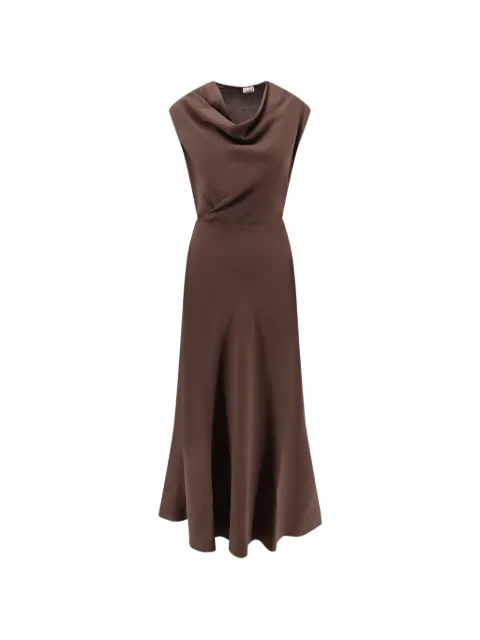
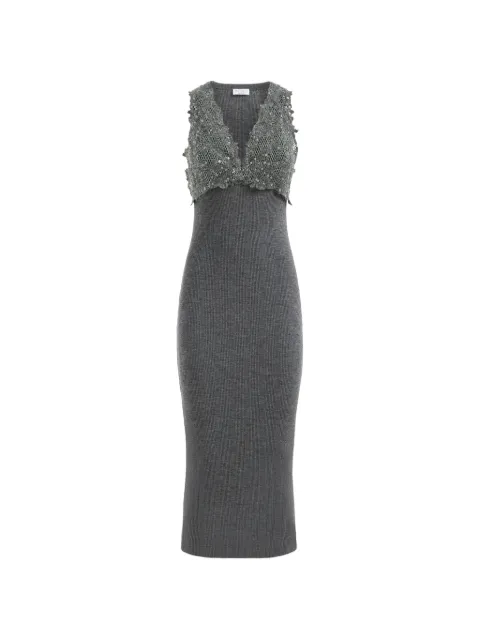
Brunello Cucinelli
think The user wants to translate "suede shirt dress" from en-GB to da-DK. I need to apply the specific instructions: - No hyphen between product name and product. - Capitalize style or product names. "suede" translates to "ruskind". "shirt dress" translates to "skjortekjole". Combining them: "ruskind skjortekjole". Since "skjortekjole" is a product name in this context, I should capitalize the first word if it stands alone, but here it's "suede shirt dress", so the "skjortekjole" isn't a proper noun style name like "Super-Star sneakers". It's a descriptive product. The instruction says "Capitalise style or product names". "shirt dress" is a product type. Let's re-evaluate "Capitalise style or product names, example: Super-Star sneakers". Here, "Super-Star" is the style name. "sneakers" is the product. "suede shirt dress" - "suede" is the material, "shirt dress" is the product type. If "shirt dress" itself is considered a product name, then "Skjortekjole". However, "suede shirt dress" is a generic description. Let's check previous examples or common Danish e-commerce practices. "ruskind skjortekjole" seems like the most natural translation. If it were a specific model like "The Shirt Dress", then "Skjortekjole". But this is a generic description. Let's stick to the direct translation for generic descriptions. "ruskind" + "skjortekjole". No hyphen rule applies if it was "suede-shirt dress". Here it's two separate words describing a single item, but "skjortekjole" is already a compound word in Danish. Final translation: "ruskind skjortekjole". No numbers, no metrics, no print, no specific brand names. Just a straightforward product description.
Fås i
XXS, XS, S, M, L, XL, XXL